HellAssociation
Who's Next?
A real-time social deduction tag case study validating clue readability, target reasoning, and discussion-phase decision quality in live multiplayer matches.
Goal
Validate target-deduction clarity in live rounds.
Confirm players can build reliable reasoning across clue-gathering, discussion, and elimination without reducing core tension.
Process
Observe full matches and reasoning under pressure.
Track full 4–10 player match flows, then reconstruct decision intent through short post-round debriefs.
Result
Locked 5 concrete fixes for fairness and flow.
Finalized implementation tasks for clue visibility, discussion guidance, misfire feedback, round pacing, and cross-platform readiness.
The Company
HellAssociation & Who's Next?
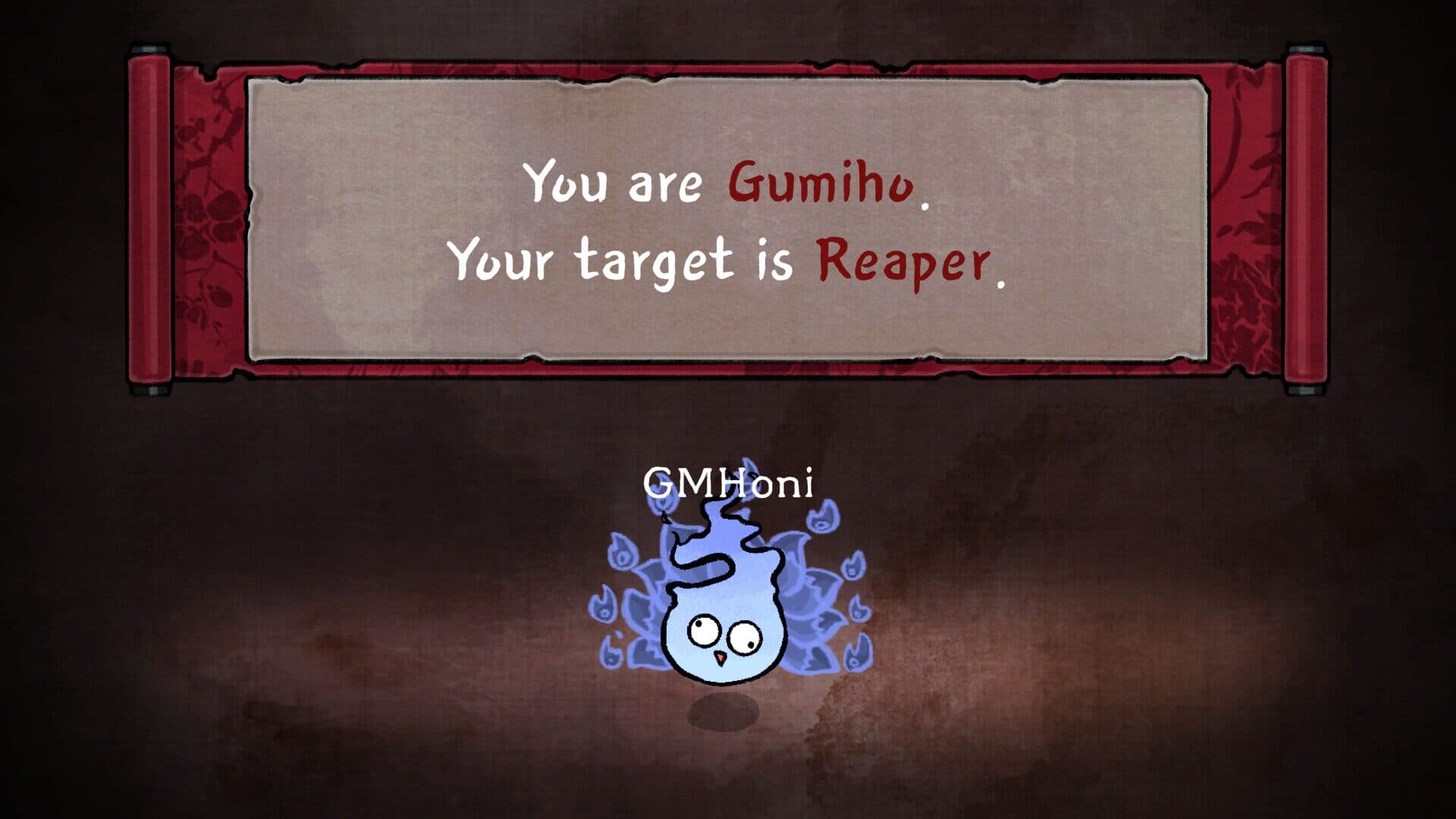
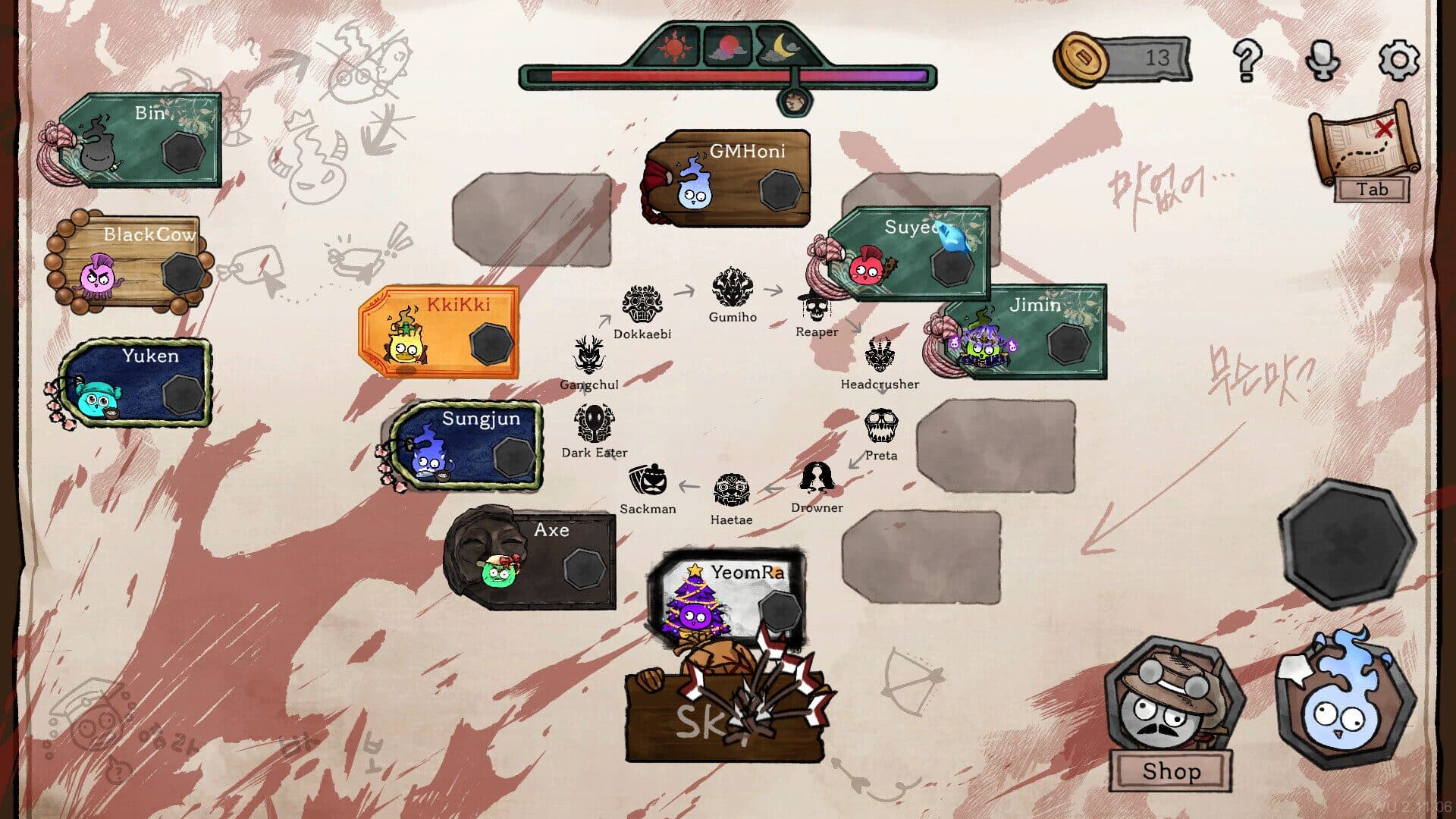
Who's Next? is a real-time social deduction title built around a Korean underworld motif. Every player belongs to a linear target chain, but target identity is hidden at round start. The game loop combines task-based clue collection, live voice discussion, and elimination decisions under uncertainty. The core value is evidence-driven suspicion, not random accusation.
Target users
Social deduction players who enjoy high-pressure voice-based multiplayer mind games.
Development stage
Live / post-launch.

The Challenge
Keep risk high while reducing unfairness sentiment
Misfire risk is essential to tension, but unexplained failure quickly feels unfair. The team needed to preserve high-stakes deduction while improving how players interpret evidence and outcomes in fast, noisy rounds.
Players can fail the guess, but they still need to understand why they failed.
The Solution
Dual-layer analysis: behavior traces plus voice context
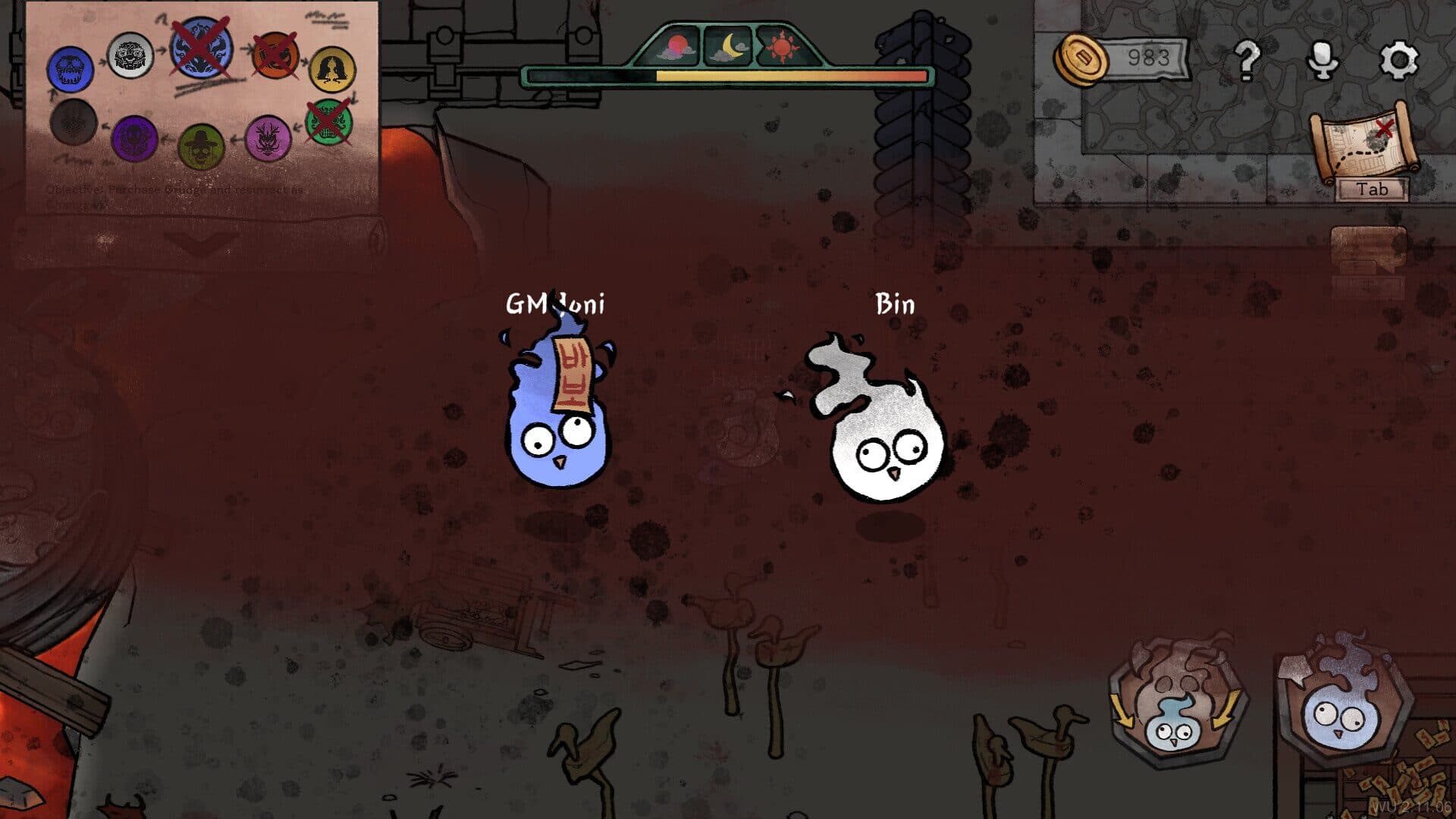
Each match was tracked for task sequence, discussion timing, elimination decisions, and misfire rounds. Debriefs then reconstructed player reasoning to separate readability issues from intentional bluff-driven uncertainty.
Because voice chat changes information quality in real time, prioritization focused not only on static UI text but on signal timing overlap and decision-window clarity.
The Result
Improvements that raise fairness perception and match tempo
The review produced concrete changes that improved both perceived fairness and round-to-round pacing.
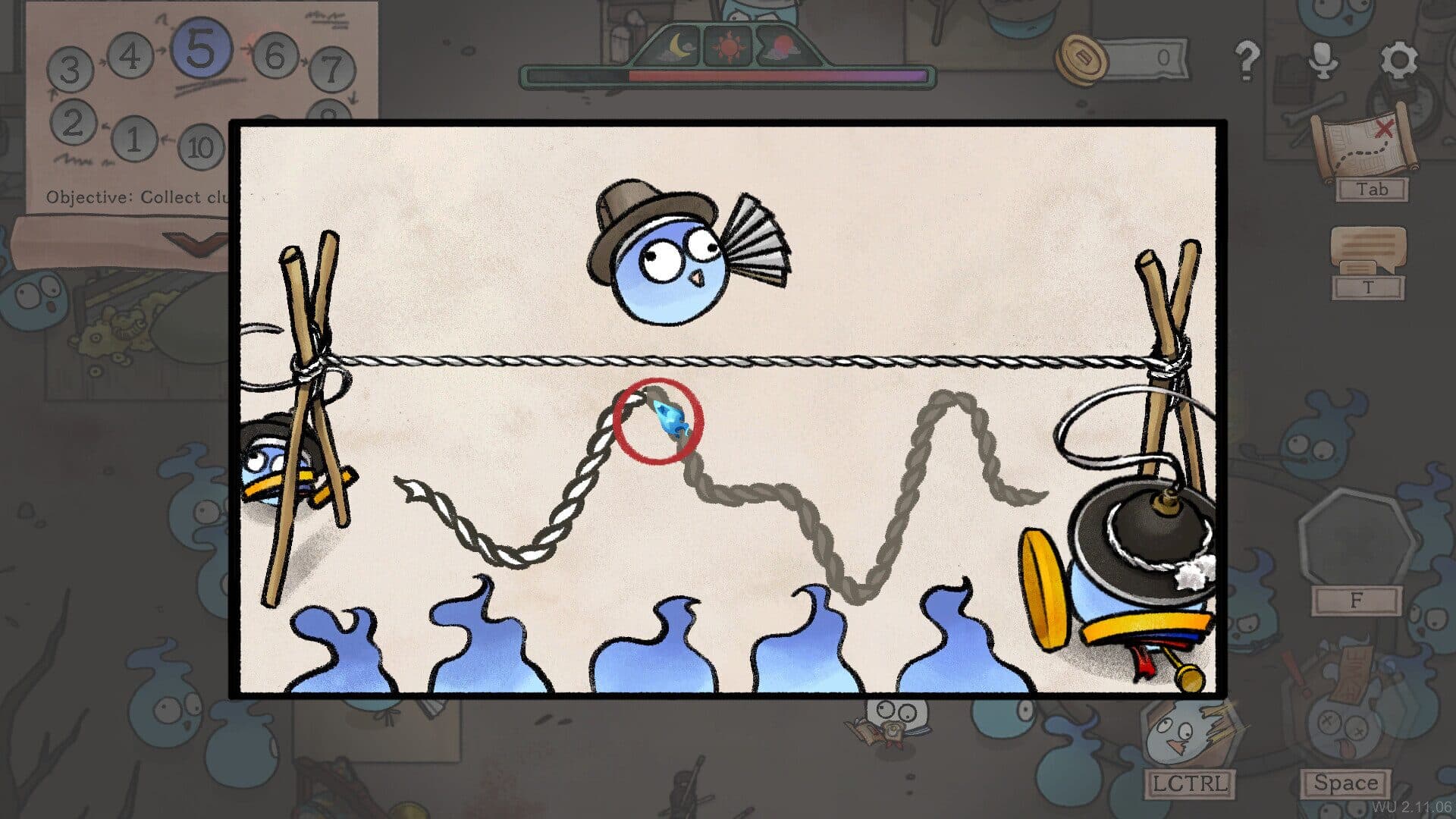
- Clue UI reprioritization reduced time-to-reasoning in active rounds.
- Discussion guidance updates improved speaking-entry confidence for new players.
- Misfire feedback made failure causes explicit, reducing frustration loops.
- Round pacing adjustments cut waiting fatigue in mid-to-late sessions.
- Cross-platform checkpoints aligned PC UX decisions with mobile rollout plans.
Team feedback
Issue triage became much faster
The studio reported that problems previously labeled as generic balance issues were reclassified into communication, rule comprehension, and social dynamics buckets, which made fix ordering significantly faster.
What felt like a mood problem turned out to be a signal-design problem.