The Yellow Room
Grill'd: The Vanishing
A first-person mystery detective adventure where players connect clues in a locked manor and interrogate suspects during a dinner sequence.
Goal
Check UI and narrative understanding.
Verify that players can read the updated deduction UI and follow day-two narrative intent without extra guidance.
Process
Run structured offline day-two sessions.
Executed offline sessions (50 min play + 10 min debrief) and logged both behaviors and spoken reasoning at friction points.
Result
Locked 6 day-two fix priorities.
Confirmed immediate fixes for UI feedback, provisional-link exceptions, puzzle bottlenecks, dialogue tone, transition staging, and script defects.
The Company
The Yellow Room & Grill'd: The Vanishing
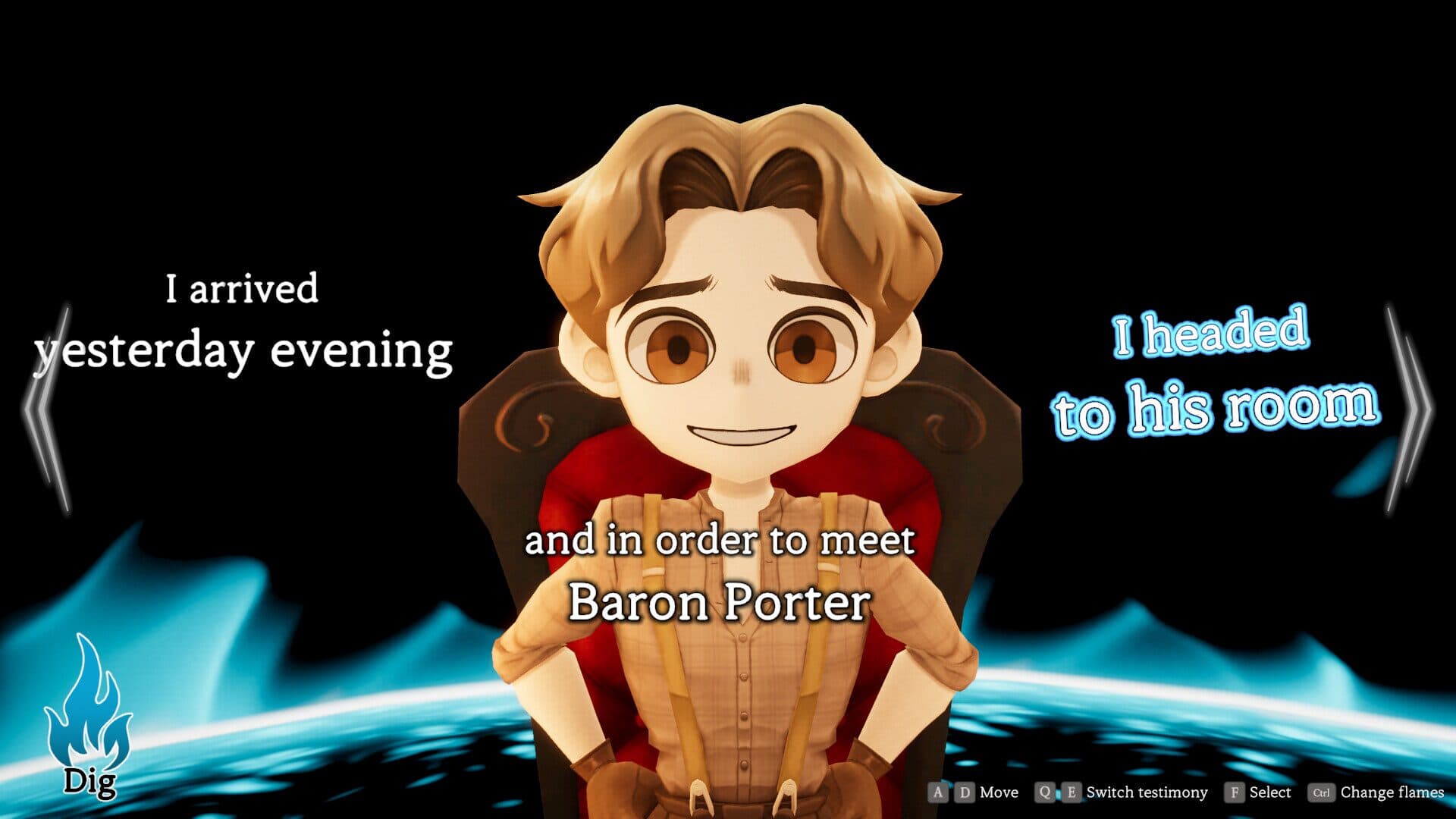
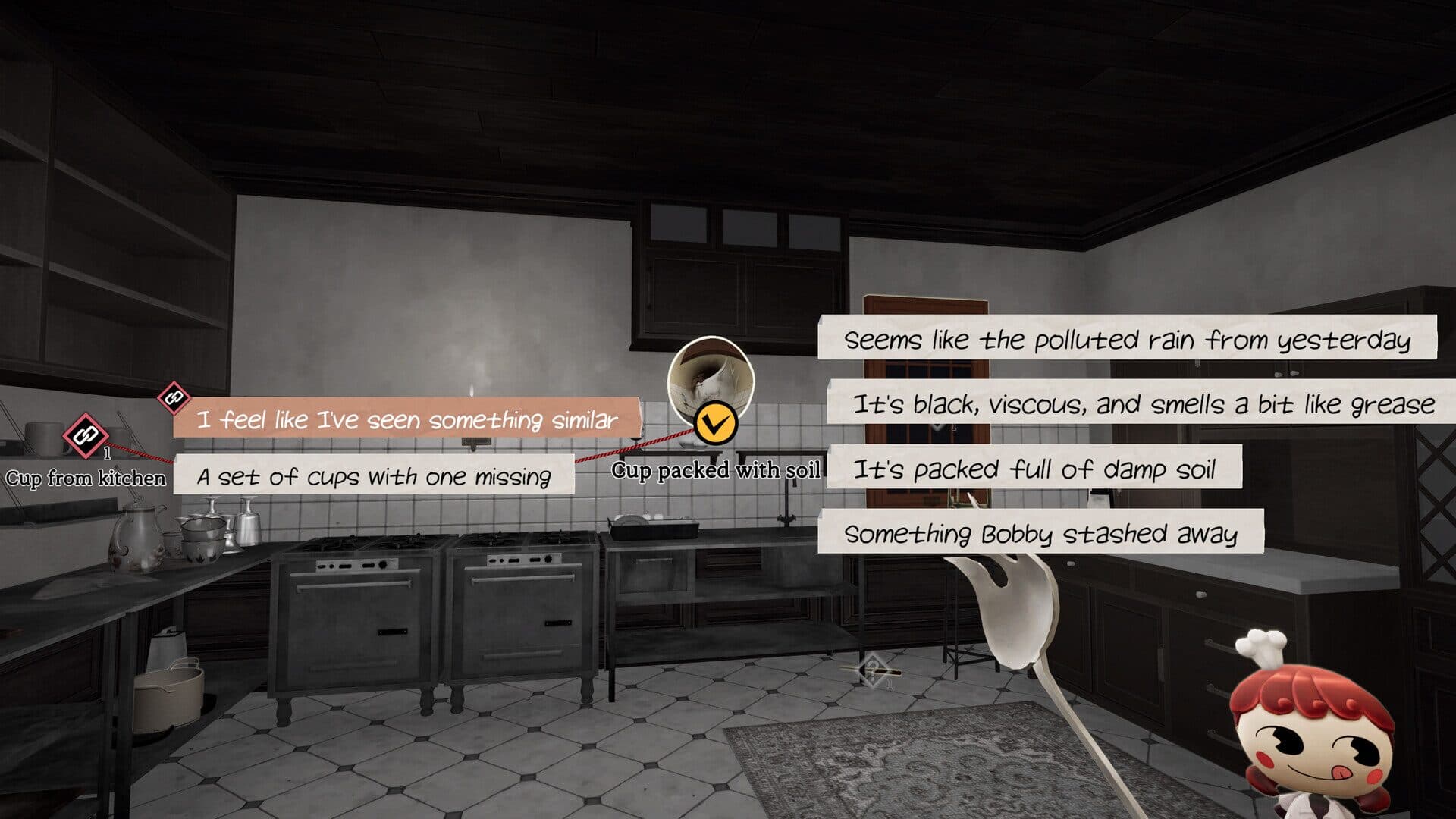
Set in the isolated Porter manor, the game places players in the role of royal investigator Ashley as a decade-old disappearance pattern begins again. Players gather spatial clues in first person, connect relationships directly, and narrow suspects through dinner-time interrogation and contradiction checks.
Target users
Players in their 20s–30s, especially mystery and narrative-adventure fans.
Development stage
Demo.

The Challenge
Validate UI readability and day-two narrative flow
The team needed to verify whether updated deduction UI, newly introduced validation/provisional-link systems, and day-two narrative pacing were understandable for first-contact players. A core objective was to catch misunderstanding loops and progression friction that internal teams often miss.
For narrative deduction games, external player perspective is essential because objective rubrics are hard to define.
The Solution
Offline sessions with decision-intent tracing
The team tested a day-two build in an offline format (about 50 minutes play + 10 minutes Q&A). Prompts targeted connection-UI readability, true causes of progression friction, and whether deduction tension was sustained or became predictable.
Instead of collecting only sentiment, the team traced both behavior and spoken reasoning. That made it possible to translate findings directly into implementation tasks: UI feedback updates, exception handling, and puzzle-text calibration.
The Result
Concrete improvements across UX, systems, narrative, and quality
The test produced practical priorities by component, not only overall sentiment.
- Deduction icon readability: participants learned icon purpose without extra onboarding.
- Validation system: day-one experienced players responded positively and asked for rollout to earlier content.
- Provisional-link error loop: players changed clues instead of verdict states in some wrong paths, validating the need for clearer visual feedback and exception logic.
- Bottleneck detection: repeated friction at the final laundry linkage sequence provided evidence for copy and difficulty adjustment.
- Narrative correction points: mixed reactions to helper tone/line volume and abrupt day-two attitude shift indicated consistency gaps.
- Bug discovery: script stalls and UI freezing were identified in specific close-up and dialogue-log interactions.
Why The Yellow Room recommends Plithus
Seeing context beyond raw metrics
The studio highlighted two strengths: purpose-fit test design from the planning phase, and in-person observation of both gameplay actions and non-verbal reactions. That combination helped them diagnose not only what failed, but why it failed, which made prioritization and revision cycles faster.
The more abstract and sensory the genre, the more valuable outside observation becomes.